


16/11/2026
Digital Privacy and Security Tips for Online Shoppers in Ireland
Online shopping in Ireland is now a regular part of your daily routine, whether you are ordering essentials for home delivery or picking out items from international shops.
With this level of convenience, it is even more important to be aware of your digital privacy, especially when you want to make discreet purchases. Whether you are buying everyday goods or browsing more personal products through sites like Sinful Ireland, you need to know how your information is used and protected so you can shop with confidence.
As an Irish shopper, you may turn to online retail for everything from groceries to gifts and enjoy greater privacy and discretion compared with busy in-store shopping. However, risks are not just for tech enthusiasts. Anyone can be exposed to scams, unauthorised charges, or unwanted marketing if you do not pay attention to basic privacy protections.
Your data can reveal more than just what you buy. It can indicate where you live, who you are, and what your preferences are. This makes your digital privacy just as important as safe delivery or finding the best price.
Phishing attacks are a serious issue for online buyers. Emails or texts that seem to come from delivery companies or banks may urge you to click a link or share your details. Clicking these links can put both your payment and personal information at risk.
Fake online stores are another risk, especially around busy shopping times. These sites may mimic trusted retailers and tempt you with low prices. However, you could end up sharing card details with criminals or receive nothing at all. Using the same password for several accounts increases your risk, as cybercriminals could access your payment details if just one site is compromised.
When making a payment, you may choose between your regular debit card, a digital wallet, or a single-use virtual card number. Some Irish banks now offer these virtual numbers for one-off purchases, which can be especially useful on unfamiliar sites. Digital wallets like Apple Pay or Google Pay add a layer of security by not passing your real card details to every retailer.
Look for a web address starting with “https” and a padlock symbol as signs of a secure checkout. However, these features alone are not proof of legitimacy. Fraudulent sites often imitate them. Avoid completing purchases while on public Wi-Fi. Stick to private connections to minimise the risk of your data being intercepted.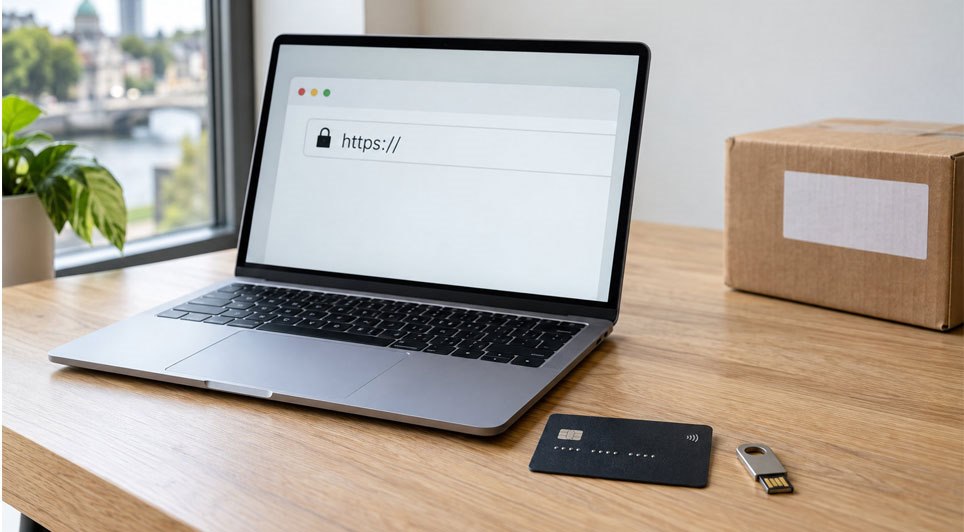
Online accounts often ask for more than just your card number. When creating a profile or checking out, limit the information you give, and only fill out necessary delivery fields. Be careful with optional information or marketing consent boxes, as sharing more personal data than needed can increase your risk without offering any real benefit.
Whenever possible, choose delivery or collection options that let you pick a neutral collection point or request discreet packaging. Bear in mind that “discreet” usually refers only to the outer packaging and does not guarantee complete privacy.
Before you buy, check for an Irish address, real contact information, and clear return policies. Irish and EU consumer protection rules generally require retailers to provide these details and to explain your options for cancellations and returns. Independent reviews can help you verify a retailer’s legitimacy. Be cautious with reviews that sound too generic, repeat the same phrases, or seem overly positive.
If privacy is a top concern, look for “discreet packaging” explained in the seller’s policy. Always check exactly how your package will be delivered and how your personal data will be processed.
Start by protecting your online accounts with strong, unique passwords for every shopping site you use. A password manager can help generate and store secure passwords, and enabling two-factor authentication gives you extra protection against unauthorised access. Keep your device software and browser privacy settings up to date, and use tracking controls to limit third-party data collection.
If you see an unexpected charge or receive a confirmation for an order you did not make, act straight away. Take screenshots of suspicious messages or emails and contact your bank immediately to freeze your card or block transactions. You can report suspected scams to the Gardaí and the Competition and Consumer Protection Commission, both of which support Irish consumers dealing with fraud.
• Always use trusted devices and networks for shopping
• Check the retailer’s contact information and return policy
• Use a strong, unique password and turn on two-factor authentication
• Share only the personal details necessary for your order
• Be alert for phishing and suspicious offers
• Read independent customer reviews before placing an order
• Confirm exactly what “discreet” delivery means for your purchase
With this level of convenience, it is even more important to be aware of your digital privacy, especially when you want to make discreet purchases. Whether you are buying everyday goods or browsing more personal products through sites like Sinful Ireland, you need to know how your information is used and protected so you can shop with confidence.
Growing privacy concerns with changing shopping habits
As an Irish shopper, you may turn to online retail for everything from groceries to gifts and enjoy greater privacy and discretion compared with busy in-store shopping. However, risks are not just for tech enthusiasts. Anyone can be exposed to scams, unauthorised charges, or unwanted marketing if you do not pay attention to basic privacy protections.
Your data can reveal more than just what you buy. It can indicate where you live, who you are, and what your preferences are. This makes your digital privacy just as important as safe delivery or finding the best price.
The real risks faced by Irish online shoppers
Phishing attacks are a serious issue for online buyers. Emails or texts that seem to come from delivery companies or banks may urge you to click a link or share your details. Clicking these links can put both your payment and personal information at risk.
Fake online stores are another risk, especially around busy shopping times. These sites may mimic trusted retailers and tempt you with low prices. However, you could end up sharing card details with criminals or receive nothing at all. Using the same password for several accounts increases your risk, as cybercriminals could access your payment details if just one site is compromised.
Making safer payment and checkout decisions
When making a payment, you may choose between your regular debit card, a digital wallet, or a single-use virtual card number. Some Irish banks now offer these virtual numbers for one-off purchases, which can be especially useful on unfamiliar sites. Digital wallets like Apple Pay or Google Pay add a layer of security by not passing your real card details to every retailer.
Look for a web address starting with “https” and a padlock symbol as signs of a secure checkout. However, these features alone are not proof of legitimacy. Fraudulent sites often imitate them. Avoid completing purchases while on public Wi-Fi. Stick to private connections to minimise the risk of your data being intercepted.
Protecting more than just payment details
Online accounts often ask for more than just your card number. When creating a profile or checking out, limit the information you give, and only fill out necessary delivery fields. Be careful with optional information or marketing consent boxes, as sharing more personal data than needed can increase your risk without offering any real benefit.
Whenever possible, choose delivery or collection options that let you pick a neutral collection point or request discreet packaging. Bear in mind that “discreet” usually refers only to the outer packaging and does not guarantee complete privacy.
Quick checks for safer retail choices
Before you buy, check for an Irish address, real contact information, and clear return policies. Irish and EU consumer protection rules generally require retailers to provide these details and to explain your options for cancellations and returns. Independent reviews can help you verify a retailer’s legitimacy. Be cautious with reviews that sound too generic, repeat the same phrases, or seem overly positive.
If privacy is a top concern, look for “discreet packaging” explained in the seller’s policy. Always check exactly how your package will be delivered and how your personal data will be processed.
Good habits for your devices and accounts
Start by protecting your online accounts with strong, unique passwords for every shopping site you use. A password manager can help generate and store secure passwords, and enabling two-factor authentication gives you extra protection against unauthorised access. Keep your device software and browser privacy settings up to date, and use tracking controls to limit third-party data collection.
What to do if your digital privacy is compromised
If you see an unexpected charge or receive a confirmation for an order you did not make, act straight away. Take screenshots of suspicious messages or emails and contact your bank immediately to freeze your card or block transactions. You can report suspected scams to the Gardaí and the Competition and Consumer Protection Commission, both of which support Irish consumers dealing with fraud.
Checklist for your next online purchase
• Always use trusted devices and networks for shopping
• Check the retailer’s contact information and return policy
• Use a strong, unique password and turn on two-factor authentication
• Share only the personal details necessary for your order
• Be alert for phishing and suspicious offers
• Read independent customer reviews before placing an order
• Confirm exactly what “discreet” delivery means for your purchase
Latest Irish News
18 November 2026
Dublin Tech Week To Return In May 2027
Dublin Tech Week will return for its third year from 21 to 28 May 2027, with organisers inviting businesses, communities, educators and creatives across the city to contribute events and activities. The initiative has grown since its launch in 2025, when 45 events attracted more than 12,000 participants.
18 November 2026
€6 Million Plan For Special Education Training
Ireland's Minister for Education and Youth, Hildegarde Naughton, has brought a €6 million package for special and inclusive education training to Cabinet.
€6 Million Plan For Special Education Training
Ireland's Minister for Education and Youth, Hildegarde Naughton, has brought a €6 million package for special and inclusive education training to Cabinet.
18 November 2026
Ardfinnan Boil Water Notice Lifted
Customers supplied by the Ardfinnan Regional Water Supply can again drink tap water and use it to prepare food after a boil water notice in place since June was lifted. Uisce Éireann confirmed the decision on 17 November following consultation with the Health Service Executive (HSE).
17 November 2026
Dublin Launches Dog Fouling Campaign
Dublin City Council has launched a campaign called 'No More Cr*p Excuses' to tackle dog fouling across the city. The campaign uses photographs to show how people are directly affected when dog owners fail to clean up after their pets. It follows the council's 'No More Rubbish Excuses' campaign, launched in 2025 to address general waste.
17 November 2026
Conna Boil Water Notice Remains In Place
A boil water notice remains in place for 4,400 customers on the Conna Public Water Supply, despite supplies being restored to most homes and businesses in the area. In an update on 16 November, Uisce Éireann said water had returned to Conna village, Rathcormac, Bridesbridge, Castlelyons, Ahern, Kildinan, Kilclare and surrounding areas.
17 November 2026
Two Arrested In Fatal Edenderry House Fire Inquiry
Gardaí have arrested two men in connection with their investigation into a fatal house fire in Edenderry, County Offaly. The fire occurred at a home in Castleview Park on the evening of Saturday 6 December 2025. Gardaí said they were continuing to investigate all the circumstances.
16 November 2026
Digital Privacy and Security Tips for Online Shoppers in Ireland
Online shopping in Ireland is now a regular part of your daily routine, whether you are ordering essentials for home delivery or picking out items from international shops. With this level of convenience, it is even more important to be aware of your digital privacy, especially when you want to make discreet purchases.
16 November 2026
Ireland Champions Global Peatland Action
Ireland will become a Champion Country in the Peatland Breakthrough Initiative, an international effort to protect, restore and sustainably manage peatlands, the Government has announced.
Ireland Champions Global Peatland Action
Ireland will become a Champion Country in the Peatland Breakthrough Initiative, an international effort to protect, restore and sustainably manage peatlands, the Government has announced.
16 November 2026
Irish Leaders Welcome Philomena's Law
Taoiseach Micheál Martin and Ireland’s Minister for Children, Disability and Equality, Norma Foley, have welcomed the passing of UK legislation known as Philomena's Law.
Irish Leaders Welcome Philomena's Law
Taoiseach Micheál Martin and Ireland’s Minister for Children, Disability and Equality, Norma Foley, have welcomed the passing of UK legislation known as Philomena's Law.
13 November 2026
UCC Launches Green Skills Academy
University College Cork has launched what it says is Ireland's first dedicated university sustainability education and training academy, with the aim of helping people and organisations develop skills for the green transition.
UCC Launches Green Skills Academy
University College Cork has launched what it says is Ireland's first dedicated university sustainability education and training academy, with the aim of helping people and organisations develop skills for the green transition.
-


 Ireland WeatherThis Evening and Tonight:Variable amounts of cloud and occasional rain through the evening and night. Mist and fog patches developing where skies clear for any length of time. Minimum temperature 3 °C.